
5 Mistakes to Avoid With AC Installation
A correctly sized AC unit that’s installed incorrectly will still fail to cool your home and can run 20 to 30 percent more on your electric bill. And here’s the frustrating part: the contractor who did the install will almost always blame the unit, not the installation. We’ve been called out to Los Angeles homes for years to fix exactly this, and four out of five AC problems we see in the first summer after an install trace back to shortcuts taken during the installation itself, not a bad unit from the factory. Most of those shortcuts could have been caught by asking five specific questions before the contract was ever signed.
If you’d rather not deal with any of this yourself, call (817) 402-2972 and we’ll walk you through what a proper AC installation in Los Angeles should look like.
Here are the five mistakes we see most often, what they cost you, and the questions that catch them.
1. Skipping the Manual J Load Calculation
The single most common installation mistake we see in Los Angeles is the oversized unit. It happens when a contractor skips the Manual J load calculation, which is the industry’s standard method for figuring out exactly how much cooling your specific house needs. Instead of measuring, they guess. And when contractors guess, they guess big, because nobody ever got a callback for a unit that was “too powerful.”
But an oversized AC unit is a real problem. It cools the house down so fast that it shuts off before it’s had time to pull humidity out of the air. Then the temperature rises, the unit kicks back on, and the cycle repeats. We call that short-cycling. It leaves your home feeling damp and clammy even when the thermostat says 74. It runs up your electric bill because every startup draws a surge of power. And it wears out the compressor and fan motor years ahead of schedule, so a unit that should last 15 to 18 years dies in 8 to 10.
The Manual J calculation accounts for square footage, ceiling height, window orientation, insulation levels, and how much sun your roofline catches in August. It’s math, not magic, and it takes real time to do properly.
The question to ask: “Will you perform a Manual J load calculation before recommending a unit size?” If the answer is anything other than a straightforward yes with a copy of the calculation included in your bid, keep looking.
The good news is that all major manufacturers, including Lennox and Goodman, publish engineering data that assumes the load calculation was done correctly. If it wasn’t, you’re buying a unit that can’t perform the way the spec sheet says it will.
2. Wrong Refrigerant Line Sizing on Rooftop Installs
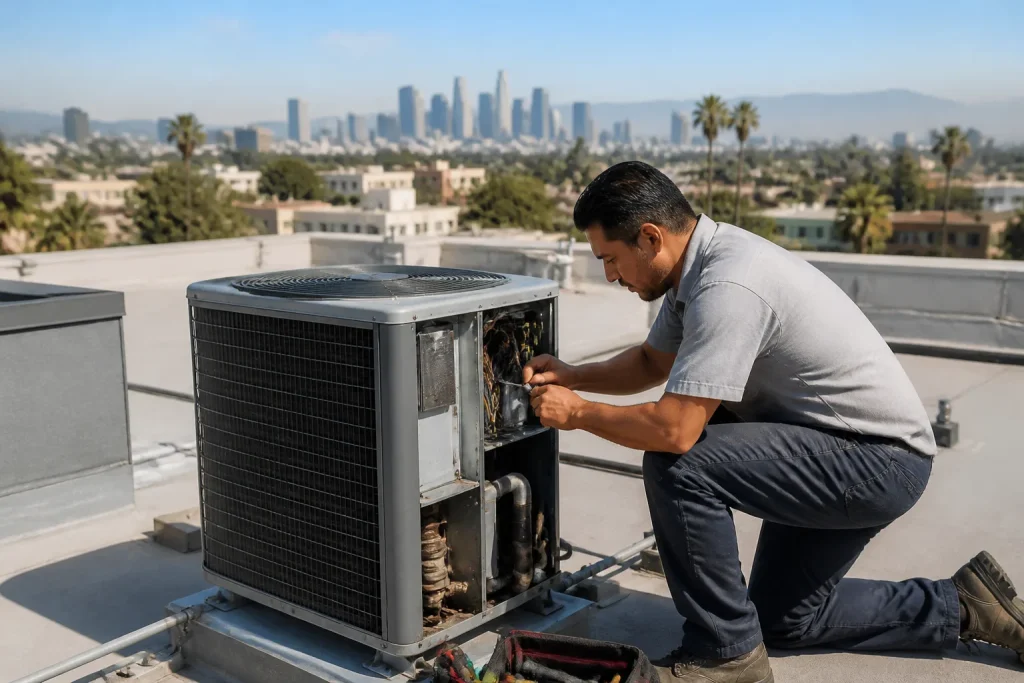
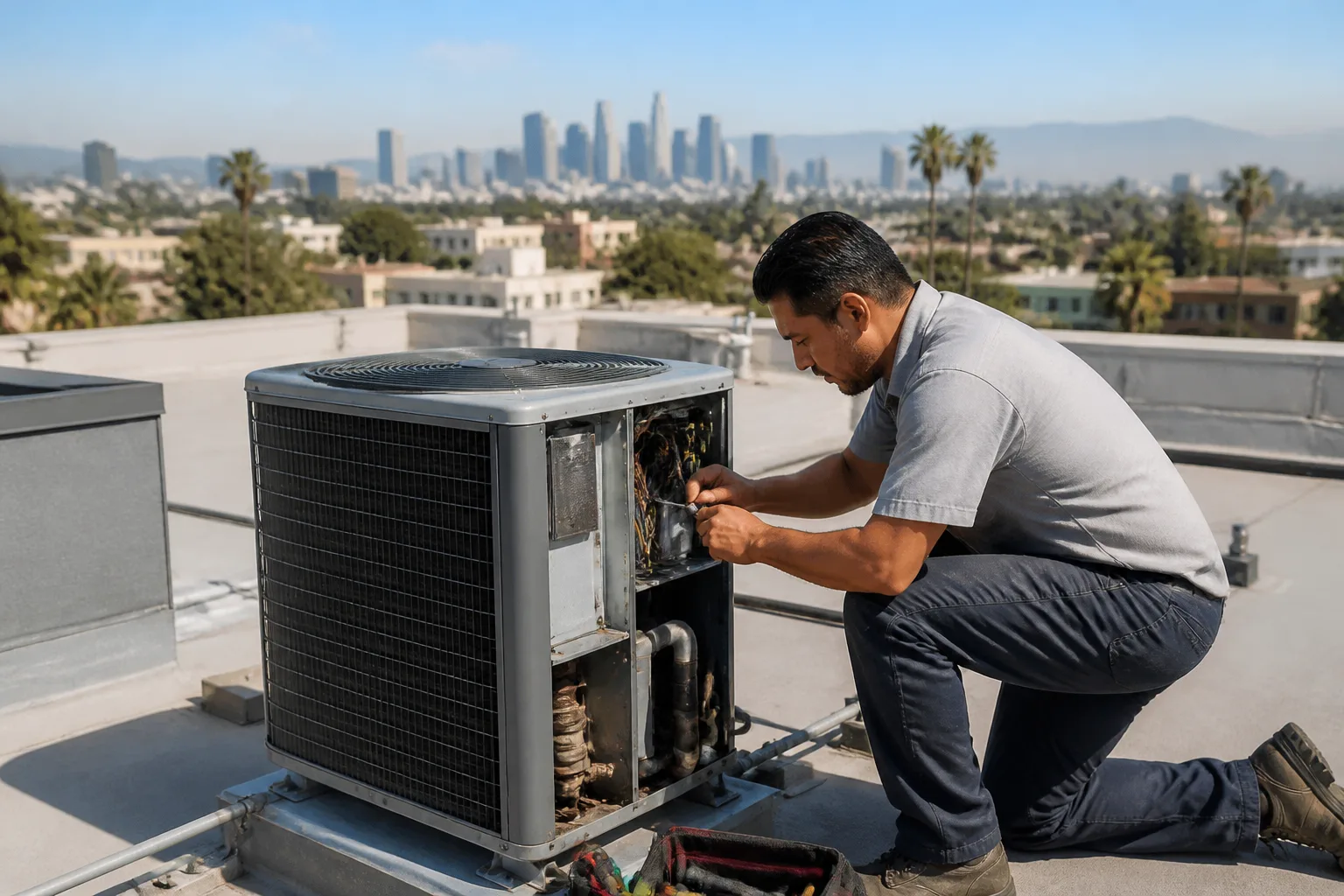
Los Angeles has thousands of homes with rooftop AC units, and rooftop installs come with a specific problem: long refrigerant line runs. The copper lines that carry refrigerant between your indoor coil and the outdoor unit are sized precisely for the distance they need to travel and the tonnage of the system. Get the sizing wrong and you get oil return problems, reduced capacity, and premature compressor failure.
We pulled a unit out of a garage over in Echo Park last year where the installers had reused old refrigerant lines from a smaller system. The new unit was a 4-ton, the old lines were sized for a 2.5-ton. The compressor burned out in 14 months, which is about what you’d expect when the system can’t circulate oil properly.
This is the kind of mistake that’s invisible to a homeowner. The lines are hidden in walls or run along the roofline, and unless you know what you’re looking at, everything appears fine. That’s why documentation matters.
The question to ask: “Are the existing refrigerant lines correctly sized for the new system, and will you document the line sizes and total length in the contract?” A competent installer will note the suction line and liquid line diameters and confirm they match the manufacturer’s requirements. If they tell you not to worry about it, that’s a red flag.
3. Improper Electrical Work That Voids the Warranty
Every AC installation involves electrical work: a dedicated circuit, proper wire gauge, a disconnect box, and correct breaker sizing. When that work is done without a permit or without matching the manufacturer’s installation instructions, two bad things happen.
First, you’ve got a safety issue. Undersized wiring gets hot, connections loosen over time, and in the worst case you get a fire hazard. Second, an improperly installed electrical connection gives the manufacturer an easy out when you try to file a warranty claim. The installation instructions for units from Rheem and York are explicit: follow the electrical specs or the warranty doesn’t apply.
In Los Angeles, a proper AC installation requires a mechanical permit from the Department of Building and Safety, plus an electrical permit if the circuit is new or being modified. A reputable contractor pulls those permits, schedules the inspections, and stands behind the work when the inspector shows up. A contractor who suggests skipping permits “to save you money” is really saving themselves the time and scrutiny, and sticking you with the liability.
The question to ask: “Will you pull permits for this installation and handle the inspections?” If the answer is no, walk away. An unpermitted install also creates problems when you sell the home, which we’ll get to in a minute.
4. Ignoring the Existing Ductwork
The lowest installation bid almost always skips something. And the first thing it skips is a duct inspection.
Here’s what uninspected ductwork does to a brand new AC unit. The blower motor pushes conditioned air into ducts that are leaking, disconnected, or undersized for the new system’s airflow requirements. Some of that air ends up in the attic or crawlspace instead of your living room. The system has to work harder to hit the thermostat setting, which uses more electricity. And if the static pressure is too high because the ducts are too small, you get the same early component failure you’d get from any other installation shortcut.
We’ve measured duct leakage in Los Angeles homes at 25 to 40 percent on systems where the ducts hadn’t been touched in 20 years. You’re paying to cool your attic at that point.
A proper installation includes a duct inspection before the equipment goes in: checking for leaks, verifying the duct sizing matches the new system’s airflow, and recommending sealing or replacement if the ducts can’t do the job. It adds cost to the bid, which is exactly why the low bidder leaves it out.
The question to ask: “Does this quote include a ductwork inspection and any sealing or modifications needed for the new system?” If the salesperson says they’ll “take a look” but there’s no line item for it, you’re getting a unit bolted onto a failing distribution system.
5. Skipping Permits to “Save Money”
Let’s talk about the permit question directly, because a surprising number of Los Angeles homeowners don’t know they need one at all. An AC installation without a permit means no third-party inspection of the work. No one checks the electrical connections, the refrigerant charge, the condensate drainage, or the structural mounting. The contractor’s word is the only assurance you have, and the contractor has every incentive to finish fast and move on to the next job.
When you eventually sell your home, unpermitted work shows up during the pre-sale inspection. The buyer’s inspector flags it, the title company may get involved, and you’re negotiating from a weak position. Some buyers walk entirely. The money you “saved” by skipping the permit comes back as a price reduction or a rushed retrofit that costs more than the permit would have in the first place.
A permitted installation gives you a paper trail: the permit application, the inspection sign-off, and documentation that the work met code. That matters for your insurance, your warranty, and your home’s resale value.
The question to ask: “Will you include the permit and inspection in the written quote?” That’s the question that separates installers who stand behind their work from installers who hope you never ask.
Related Services in Los Angeles
If you’re in Los Angeles and planning an AC installation, start with our AC Installation in Los Angeles page for a breakdown of what a proper install includes and what it costs. If your current system is struggling and you’re not sure whether to repair or replace, see our AC Repair in Los Angeles page. And if it’s the heating side giving you trouble, we’ve got Furnace Repair in Los Angeles covered too.
What happens when you call
- 1
A real person answersNo phone trees - you reach a local pro.
- 2
You get an upfront price rangeHonest numbers before anyone is dispatched.
- 3
A background-checked tech heads outLicensed & insured, dispatched right away.
- 4
You approve before work beginsNothing starts until you say go.
When to Call a Pro
Some parts of an AC installation are genuinely dangerous to do yourself: electrical connections to a 240-volt circuit, refrigerant charging under pressure, and lifting a 200-pound condenser onto a rooftop. We don’t recommend DIY on any of those. We’ve seen too many close calls with improvised electrical work and refrigerant burns to pretend otherwise. If you’re not a licensed HVAC technician, hire one. The question list above will help you hire the right one.
The Bottom Line
The five mistakes are all preventable by asking the right questions before you sign: Will you do a Manual J? Are the refrigerant lines the right size? Will you pull permits? Does the bid include a duct inspection? Is the permit and inspection written into the quote? A contractor who answers all five clearly and in writing is a contractor who does the job correctly.
If you’re in Los Angeles and want an AC installation done the right way from the start, Coldharbour Heating & Air home is where you’ll find us. We’re independent as part of the Kingswell network, and we’ve been serving Los Angeles. Every installation starts with a written price before the work begins, and every repair comes with our Done Right Promise in writing. Call (817) 402-2972 for a free estimate.
Frequently Asked Questions
How do I know if my AC unit is oversized?
Short cycling is the telltale sign. The unit runs for 10 to 15 minutes, shuts off, then starts again 30 minutes later. Your home feels cool but humid, and your electric bill is higher than it should be for the square footage. A technician can confirm with a load calculation that measures your home’s actual cooling requirements.
Can an AC installation void my equipment warranty?
Yes. Manufacturer warranties from brands like Lennox, Goodman, Rheem, and York are conditional on installation that follows their published specifications. Improper electrical work, incorrect refrigerant line sizing, or failing to use the prescribed components gives the manufacturer grounds to deny a claim. That’s one more reason to demand a contractor who documents the installation in writing.
Does Los Angeles require a permit for AC installation?
Yes. The City of Los Angeles requires a mechanical permit for AC installations, plus an electrical permit when modifications are made to the electrical system. A permitted installation includes an inspection that verifies the work meets code. Unpermitted installs create problems during home sales and may not be covered by your homeowner’s insurance.
Should I replace my ductwork when I install a new AC system?
Not necessarily, but you should have it inspected. Ducts that are properly sized, sealed, and in good condition can work well with a new system. Leaky or undersized ducts should be sealed or replaced, or your new unit will operate inefficiently and may fail early. Any reputable installation quote in Los Angeles should include a duct inspection.
Written by the team at Coldharbour Heating & Air.
Need HVAC Help?
Call Coldharbour Heating & Air - licensed & insured, here with fast after-hours help in Los Angeles.
(817) 402-2972