
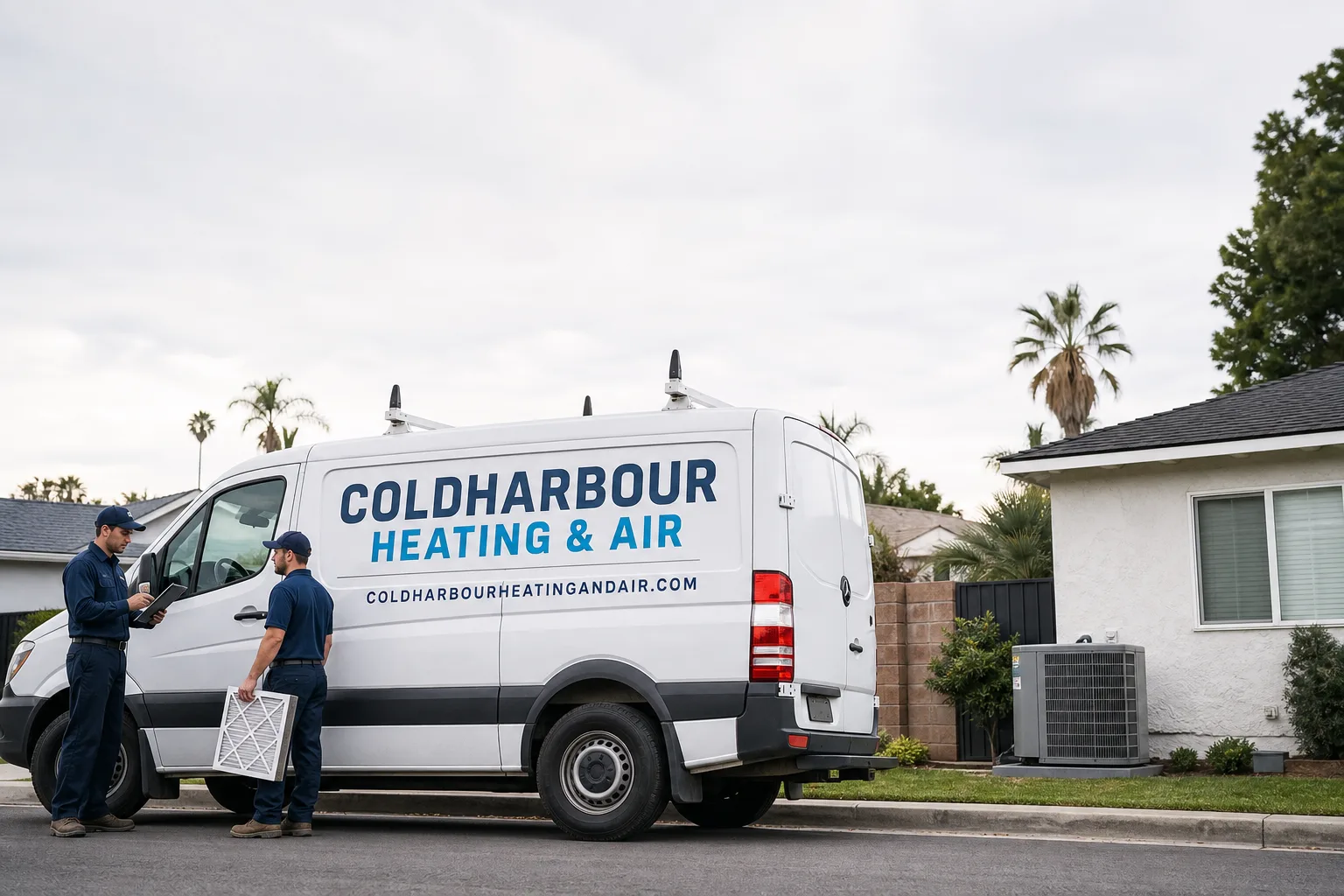
Seasonal tune-up and full diagnostic on your Carrier, Trane, or Goodman system - readings shown to you before any repair is proposed
Diagnosis first, numbers second - you approve the repair price before a single part goes in.







 Before
 After
After Before
 After
After Before
 After
AfterBurning smell when the heat comes on
What’s Happening
A burning smell when your heat first kicks on is usually one of four things: dust burning off the heat exchanger after months of sitting idle, an overheating blower motor, a cracked heat exchanger leaking combustion byproducts, or something that found its way into the ductwork. Most of the time it’s harmless. Sometimes it isn’t. The smell itself is the clue.
That first-of-the-season dusty, slightly acrid smell that fades in twenty or thirty minutes is almost always dust that settled on the heat exchanger or heating elements during the months the furnace sat unused. It burns off, and it’s gone. But if the smell is oily, electrical, metallic, or chemical – or if it doesn’t go away after one or two heating cycles – something else is wrong and the furnace should be shut off until a technician has a look. A burning plastic smell, especially, is a signal to stop using the system now.
Why It Happens
Dust on the heat exchanger or heating elements
After a long summer, a thin layer of dust coats the heat exchanger, burners, or electric heating elements inside the air handler. The first time heat runs in the fall or early winter, that dust burns off and sends a faintly smoky, almost toasty smell through every vent in the house. It dissipates on its own, usually within one full heating cycle. If the smell is gone by the time the house reaches temperature and it doesn’t come back the next day, this is almost certainly the cause.
Overheating blower motor
The blower motor pushes conditioned air through your ductwork. When a motor starts to fail – worn bearings, a capacitor going bad, or a belt (on older belt-drive units) beginning to slip – it works harder than it should and generates heat it can’t shed. The smell is distinctly electrical or rubbery, not dusty. You may also notice that the airflow from your vents feels weaker than usual, or that the system runs longer than it used to before the house reaches temperature. Either of those alongside the smell points directly at the blower.
Cracked heat exchanger
This is the one that matters most for your family’s safety. The heat exchanger is the metal chamber that separates combustion gases – including carbon monoxide – from the air that circulates through your home. When it cracks, those gases can mix into your living space. The smell is often described as sharp or chemical, not like ordinary dust burning off. If you have a carbon monoxide detector and it’s alarming, leave the house immediately and call 911 before calling anyone else. Even without an alarm, a persistent chemical smell from a furnace that has run more than a few seasons is a reason to shut the system off and call a technician the same day. Do not run the furnace.
Something in the ductwork or near a register
A plastic toy, a piece of packaging, a small animal that didn’t find its way back out – objects in or near the ductwork burn or melt when air heats up around them. The smell is usually localized: it’s stronger at one or two vents and lighter everywhere else. Check the visible registers for anything sitting on or directly in front of them. If you can see the object and it’s clearly not electrical, you can remove it safely. If the smell is coming from inside the duct itself, that’s a job for a technician with the right tools to inspect without causing damage.
What to Do Right Now
- Identify the smell before you decide anything. Dusty and faint, gone in under an hour: probably safe to monitor. Electrical, rubbery, sharp, chemical, or like melting plastic: shut the system off at the thermostat and call.
- Check your carbon monoxide detectors. Make sure every detector in the house has a working battery and is reading normally. If any alarm is sounding, get everyone out of the house and call 911 first. This is not a step to skip.
- Check the visible registers and return vents. Look for anything that may have fallen into or landed on a register – especially on floor vents in rooms with kids. Remove anything you can reach safely from the surface.
- Replace the filter if you haven’t recently. A heavily clogged filter restricts airflow and forces the blower motor to work harder, which can cause an overheating smell. Pull the filter out and hold it up to a light. If you can’t see light through it, swap it for a new one before running the system again.
- Do not attempt to open the furnace cabinet or inspect the heat exchanger yourself. The heat exchanger carries combustion gases, and the components near it can be under pressure or carry line voltage. Take a photo of the outside of the unit – model number, age label, anything visible – and have it ready when you call. That’s the most useful thing you can do.
How We Fix It
When your local Coldharbour Heating & Air technician arrives, the first thing they do is a full operational inspection: they run the furnace through a complete cycle while checking airflow, flue temperatures, burner flame color, and the condition of the heat exchanger using a camera or combustion analyzer where the visual check isn’t enough. That diagnosis tells them exactly which component is failing.
If it’s the blower motor or capacitor, the repair is typically completed the same visit. If it’s the heat exchanger, the technician will explain what they found and what your options are – that’s a furnace repair conversation, and occasionally a replacement conversation, depending on the age and condition of the unit.
Before any work starts, you receive a written price. That number doesn’t change at the door. Every repair is covered by the 365-Day Done Right Promise: if the repair fails within that year, we come back and correct it at no charge. That guarantee is written down before the technician leaves – not verbal, not conditional.
Most diagnostic visits and straightforward blower or motor repairs are finished in two hours or less. A heat exchanger job takes longer. Your technician will give you a realistic time estimate once they know what they’re dealing with.
Frequently Asked Questions
It depends entirely on the type of smell. A faint, dusty odor on the first run of the heating season is almost always harmless dust burning off and will clear up on its own. An electrical smell, a sharp chemical smell, or anything that gets stronger over time is a sign to shut the system off and call a technician right away – particularly if your carbon monoxide detectors are alarming. When in doubt, shut it off. Call us at (817) 402-2972 and describe what you’re smelling – a live person will pick up and help you decide what to do next.
If the smell is dusty and it clears up within one heating cycle, you can monitor it through the day. If the smell is electrical, rubbery, or chemical – or if it’s coming back stronger each time the system runs – it should not wait. A cracked heat exchanger can allow carbon monoxide into the living space, and a failing motor left running can cause further damage or, in rare cases, a fire. Call (817) 402-2972 now. We answer around the clock, every day of the year, and we’ll get a technician routed to you.
Yes. Your local Coldharbour Heating & Air team takes calls at (817) 402-2972 every hour of every day, and we work to get a technician to you as quickly as the schedule allows. When you call, a live person picks up – no voicemail tree, no wait-until-morning message. Tell them what you’re smelling and when it started, and they’ll work out the earliest available time with you.
The honest answer is that cost depends on what the technician finds once they inspect the system – a capacitor replacement is a very different job from a heat exchanger issue. What we can promise is this: before any work starts, you receive a written price for the specific repair needed. That price doesn’t change. There is no charge for the written estimate, and you’re not obligated to proceed. Call (817) 402-2972 to set up the visit and get your written quote.
Get It Fixed
Call (817) 402-2972 any time – a live person answers around the clock. Your local Coldharbour Heating & Air team will diagnose the smell, hand you a written price before touching anything, and back the repair with the 365-Day Done Right Promise. Book online or call now.
Written by Victor Mancini, Owner & Lead HVAC Technician, Coldharbour Heating & Air, a member of the Kingswell network of independently owned and operated HVAC businesses, founded in 2003.
What Our Customers Say
"Thermostat and a weak blower. Fixed both in one visit, explained the guarantee, and didn't leave a mess. I've already recommended them to my neighbor."
- Natalie Esposito"Honest to a fault. Two companies told me I needed a whole new unit. Coldharbour said mine had years left and just needed a cleaning and a part. Saved me thousands."
- Marcus Reilly"Furnace wouldn't light the first cold morning. The guy walked me through what he was checking so I actually understood it. Replaced the igniter, wrote up the warranty, and it's been warm since."
- Alicia Romero