
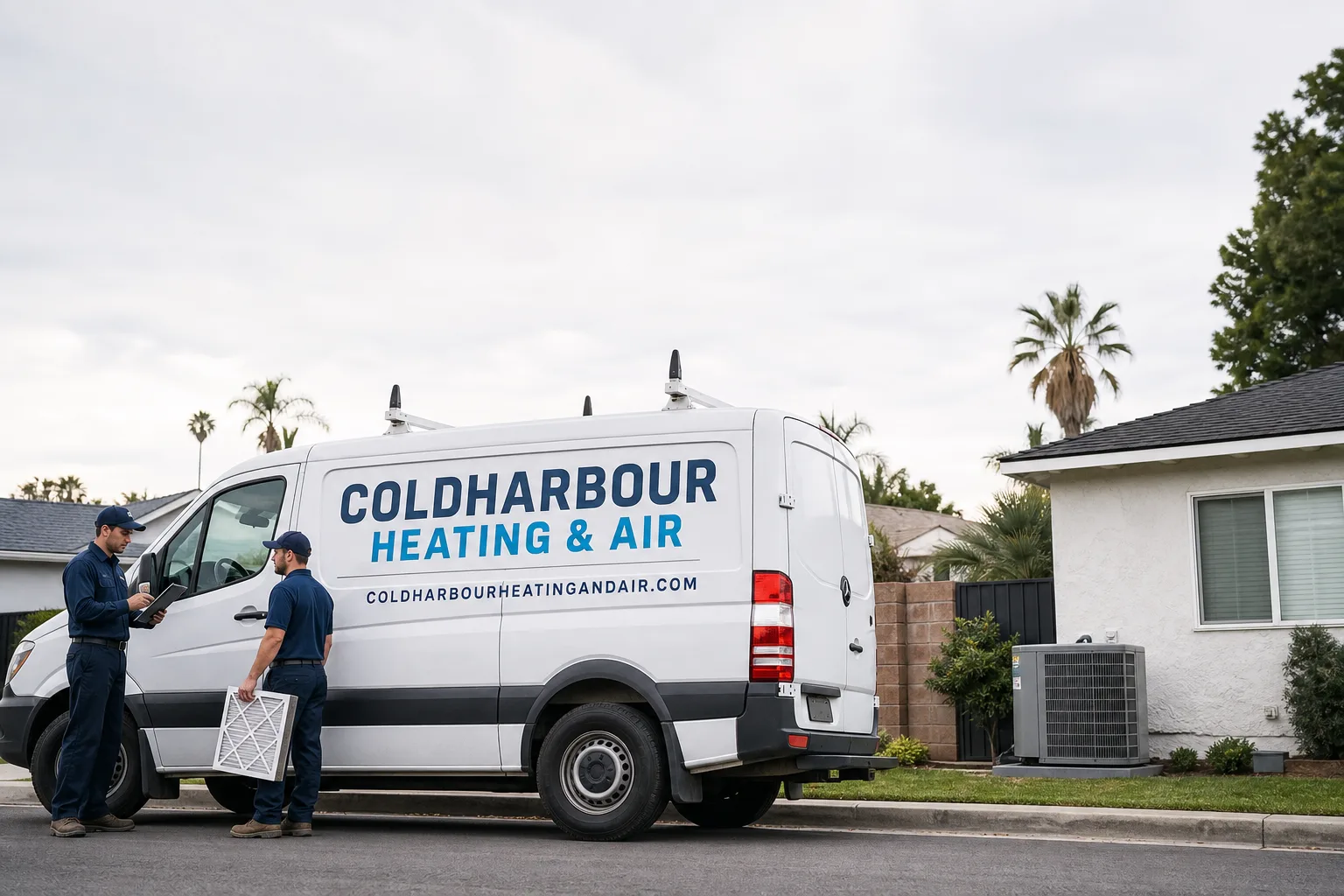
Seasonal tune-up and full diagnostic on your Carrier, Trane, or Goodman system - readings shown to you before any repair is proposed
Diagnosis first, numbers second - you approve the repair price before a single part goes in.







 Before
 After
After Before
 After
After Before
 After
AfterLoud A/C Unit
What’s Happening
A loud A/C unit almost always means a mechanical component is failing – a worn bearing, a loose part under vibration, or debris making contact with a moving assembly. These aren’t sounds the system makes when it’s healthy, and most of them get worse the longer the unit keeps running. The good news is that a trained technician can usually pinpoint the cause in a single visit and tell you exactly what it costs to fix before a single tool comes out.
The tricky part is that different sounds point to different problems, and the fix for a rattling condenser is nothing like the fix for a screaming refrigerant line. So the most useful thing this page can do is help you match what you’re hearing to what’s likely causing it – and then route you to the repair that actually solves it. Read through the causes below, and if anything sounds genuinely alarming, shut the system off and call. Running a failing A/C harder rarely ends well.
Why It Happens
Banging or Clanking – Loose or Broken Components Inside the Unit
A banging or clanking sound, especially one that starts immediately when the system kicks on, usually means something has come loose inside the outdoor condenser or the indoor air handler. Common culprits are a loose connecting rod, a displaced blower wheel, or a fan blade that has shifted and is clipping the housing on every rotation. If you can safely look at the outdoor unit and see a blade that’s visibly bent or sitting at an odd angle compared to the others, that’s your confirmation. Don’t run the system – a blade that’s clipping can escalate from a noise problem to a motor problem inside a single afternoon.
Squealing or Screeching – Belt or Bearing Wear
A high-pitched squeal that shows up when the unit starts – or runs continuously – points to one of two things: a worn fan belt on older systems that still use belt-driven blowers, or a bearing that’s failing in the blower motor or the condenser fan motor. Bearings squealing under load is the HVAC equivalent of a car making that noise when you brake – it’s telling you what’s about to fail before it fully does. Catch it at the squeal stage and it’s usually a straightforward motor or bearing replacement. Ignore it and you’re often looking at a seized motor and a system that just stops cooling.
Rattling – Debris, Loose Panels, or a Failing Contractor
Rattling is the most common noise call we get, and it covers a wide range. Sometimes it’s as simple as a stick or a handful of leaves that fell into the top of the outdoor condenser and are bouncing around the fan. Other times it’s a loose service panel or a screw that vibrated free over the course of a season. But a rattle that cycles on and off with the compressor – specifically one that seems to come from the electrical side of the unit – can signal a failing contactor, which is the electrical relay that switches the compressor on and off. That’s not a debris problem; that’s a component that needs replacing before it takes the compressor with it.
Hissing or Bubbling – Refrigerant Leak
A hissing sound from the refrigerant lines or the outdoor unit often indicates refrigerant escaping through a small crack or a failing valve. Bubbling from the same area usually means refrigerant is moving through a section of line where it shouldn’t be in liquid form – a sign the system is low on charge. Neither of these are sounds to run through. Low refrigerant forces the compressor to work harder than it’s rated for, and a compressor that fails from overwork is a much bigger repair than the leak that started it. Refrigerant handling also requires proper certification and equipment – this is not a DIY fix.
What to Do Right Now
- Turn the system off at the thermostat. If the sound is genuinely alarming – grinding, screeching, or anything metallic – shut it down now. Running a mechanically distressed A/C almost always makes the underlying problem worse.
- Walk around the outdoor condenser and take a look. Without touching anything, check for visible debris inside the top of the unit, a fan blade that looks bent or out of alignment, or a panel that’s sitting loose. Take a photo if you see something – it helps the technician before they even open the service panel.
- Listen carefully and try to describe the sound. Is it constant or does it only happen at startup? Does it come from the outdoor unit or from inside the house? High-pitched or low? That detail cuts diagnostic time significantly.
- Do not attempt to access the electrical components, refrigerant lines, or the capacitor inside the service panel. Capacitors store a charge that can be lethal even with the power off. If the rattle or hiss seems to be coming from behind that panel, leave it closed and let a trained technician open it.
- Check your air filter if the noise is coming from the indoor unit. A severely clogged filter can make the blower motor strain and produce unusual sounds. A quick filter check is safe, easy, and occasionally solves the problem on its own.
How We Fix It
When your local Coldharbour Heating & Air technician arrives, the first thing they do is listen – to you, and then to the system. They’ll run through a methodical inspection of both the indoor air handler and the outdoor condenser: checking fan blades, motor bearings, the blower assembly, the contactor, capacitor, and refrigerant pressures. That process usually takes less than an hour on a typical noise call.
Once the cause is identified, you get a written price before any work begins. That’s not a formality – it’s a core part of The Kingswell Way, and it doesn’t change when the technician walks back inside to start the repair. The work itself is covered by the 365-Day Done Right Promise: if the same problem comes back within a full year of the repair, we return and correct it at no charge, and that guarantee is in writing before the technician leaves your driveway. Most noise repairs – fan blade replacements, motor swaps, contactor replacements – are completed in a single visit. If refrigerant work is involved, your technician will walk you through exactly what that means for your specific system. The service that resolves most noise complaints is AC repair, and in some cases, what the inspection surfaces points toward a broader AC installation conversation – but that’s always your call, never a pressure point.
Frequently Asked Questions
Some noises – a light rattle from a loose panel, for example – aren’t immediately dangerous, but most mechanical noises in an A/C unit are a sign something is failing, and running the system speeds that failure up. A grinding or screeching sound from a motor bearing can turn into a seized motor in hours. A hissing refrigerant leak puts strain on the compressor that compounds quickly. Our honest advice: don’t run it until someone has taken a look. Call (817) 402-2972 and a live person will answer right now, any time of day.
Your local Coldharbour Heating & Air team works to get to noise calls promptly – a loud A/C is a system in distress, not a routine tune-up. Call (817) 402-2972 to speak with someone now and find out what availability looks like in your area today. We answer around the clock, every day of the year – no voicemail, no waiting until morning.
The written price comes before any work starts, full stop. That’s not a policy we apply selectively – it’s part of The Kingswell Way, and it’s the same on every job. If the number doesn’t work for you, you owe nothing for the diagnosis, and there’s no pressure to proceed. The estimate is free and the price is fixed once you agree to it – it doesn’t change at the door or mid-repair.
Yes, and here’s the plain reason: a system that’s still cooling but making unusual mechanical noise is usually in the early stages of a component failure. The cooling performance drops once that component fails completely, and the cost of the repair typically goes up when you’re replacing a seized motor instead of catching a worn bearing. Catching it now, while the system still runs, is almost always the cheaper outcome. Call (817) 402-2972 and let your local team take a look before it stops cooling on the hottest day of the year.
Get It Fixed
Your local Coldharbour Heating & Air team is ready to diagnose the noise, hand you a written price before anything starts, and back the repair with the 365-Day Done Right Promise. Call (817) 402-2972 right now – a live person answers every call, day or night – or book online and we’ll be in touch to confirm your visit.
Written by Victor Mancini, Owner & Lead HVAC Technician at Coldharbour Heating & Air, serving communities nationwide as an independently owned and operated member of the Kingswell network since 2003.
What Our Customers Say
"AC died overnight with a newborn in the house. They bumped us up the list and had it running by noon. I about hugged the guy. Fair price even on a rush call."
- Celeste Ngo"The repair was done well and quickly. Scheduling over the phone was a little clunky and I got transferred twice, but the tech himself was great and on time."
- Brett Haygood"Furnace was short cycling all winter. They diagnosed a bad sensor instead of condemning the whole unit like I feared. Cheap fix, honest call."
- Russ Tiedemann