
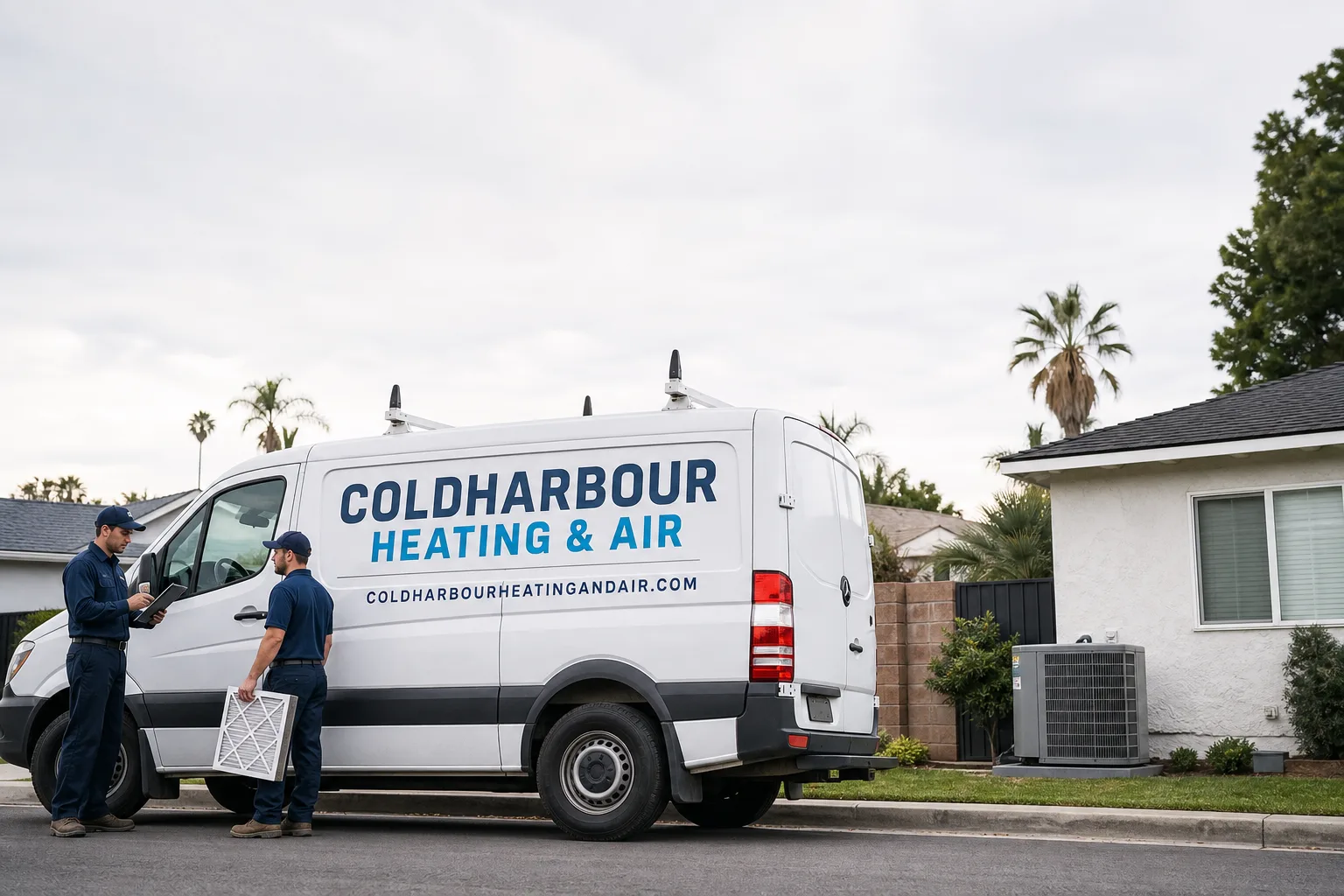
Seasonal tune-up and full diagnostic on your Carrier, Trane, or Goodman system - readings shown to you before any repair is proposed
Diagnosis first, numbers second - you approve the repair price before a single part goes in.







 Before
 After
After Before
 After
After Before
 After
AfterWater leaking around the furnace
What’s Happening
Water pooling around your furnace is almost always caused by one of three things: a blocked condensate drain, a cracked condensate line, or a secondary heat exchanger issue on a high-efficiency furnace. It can also come from a humidifier connected to the system or, less often, from the air handler’s coil. Whatever the source, the puddle you’re looking at right now is your furnace telling you something stopped draining the way it should.
The good news is that most of these causes are repairable without replacing the furnace. The less good news is that standing water near any heating system creates a short window before you’re dealing with rust, mold, or a control board that got wet and stopped working. A furnace repair visit is the right call – your local Coldharbour Heating & Air team can trace the source, stop the leak, and give you a written price before a single tool comes out.
Why It Happens
Blocked or dirty condensate drain line
High-efficiency furnaces (those rated 90% AFUE or above) produce water vapor as a byproduct of combustion. That water is supposed to drain out through a PVC condensate line – typically a white pipe running from the furnace to a floor drain or utility sink. Algae, mold, and mineral deposits can clog that line over time. When it blocks, the water has nowhere to go and backs up until it overflows at the furnace cabinet. If you can see a white PVC pipe near the base of the unit and the puddle seems to be coming from that area, a condensate blockage is the likely culprit.
Cracked or disconnected condensate line
The condensate line itself can crack from age, accidental contact, or from freezing if part of it runs through an unheated space. A disconnected elbow joint – they’re usually just friction-fit or glued – is also common, especially after a filter change or any recent work near the unit. If the pipe looks intact at the furnace but you see drips somewhere along its length before it reaches the drain, a crack or loose joint is the likely cause.
Humidifier leak
Many forced-air heating systems include a whole-home humidifier mounted directly to the furnace or the main supply plenum. These use a water feed line, a float valve, and a drain panel that can all fail independently. Water from a humidifier drains near the furnace base, and the puddle looks identical to a condensate leak from the outside. The tell is whether your furnace is a high-efficiency model or not: if it’s a standard-efficiency unit (a metal flue pipe rather than a white PVC exhaust pipe) and you’re still seeing water, the humidifier is almost certainly the source.
Cracked secondary heat exchanger
This one is less common but more serious. High-efficiency furnaces use a secondary heat exchanger to extract additional heat from combustion gases, and that process produces condensation. If the secondary heat exchanger develops a crack, combustion gases – including carbon monoxide – can enter the airstream, and water can leak out around the cabinet. A cracked heat exchanger is a safety issue, not just a mechanical one. If you’ve noticed a smell like burning or if your carbon monoxide detector has alarmed recently alongside the leak, turn the furnace off at the thermostat and call (817) 402-2972 now. This is not a symptom to wait on.
What to Do Right Now
- Turn the thermostat to “off” – not just to a lower temperature. Stopping the furnace stops the condensate production and slows the leak.
- Photograph the puddle and the area around the base of the furnace before you soak anything up. The photo shows the technician where the water appeared, which narrows the diagnosis before they’ve touched a tool.
- Soak up standing water with old towels or a wet-dry vac if you have one. Water sitting against the cabinet rusts the base and can reach electrical components on the furnace floor.
- Do not attempt to open the furnace cabinet or disconnect any gas lines. The heat exchanger carries combustion gas, and any component inside the cabinet that’s wet may be carrying current. Let the technician open the unit.
- Check whether your CO detector is alarming. If it is – or if there’s an unusual smell – get everyone out of the house, leave the door open, and call 911 before you call us. A cracked heat exchanger is a rare but real hazard, and no furnace repair is worth your family’s safety.
How We Fix It
When your local Coldharbour Heating & Air technician arrives, the first thing they do is trace the water back to its source – following the condensate system from the drain pan at the coil or secondary heat exchanger through every foot of line to the drain point. They’ll check the humidifier feed and float valve if one is present. Before any repair starts, they’ll hand you a written price. That’s not a policy applied case by case; it’s part of The Kingswell Way – say the price before the work, every time.
Most condensate clears in under an hour. A cracked line segment or a humidifier float valve replacement runs a little longer depending on access. If the heat exchanger is involved, the technician will explain what they found and what the options are, in plain terms, before anything changes. Every repair is covered by the 365-Day Done Right Promise: if the repair fails within that full year, we come back and make it right at no charge – in writing, before we leave. The service that resolves this is a furnace repair visit, and in some humidifier cases, a repair tied to the air handler side of the system.
Frequently Asked Questions
In most cases it’s a nuisance problem – a blocked drain or a cracked condensate line – not an immediate safety hazard. The exception is a cracked heat exchanger, which can allow combustion gases into the airstream. If your carbon monoxide detector is going off, or if there’s an unusual smell alongside the leak, treat it as an emergency: leave the house and call 911. Otherwise, turn the furnace off, mop up the water, and call (817) 402-2972 to get a technician out to confirm the source.
It can wait a few hours while you arrange a visit, but not much longer than that. Standing water against the furnace cabinet causes rust on the base pan and can reach the control board, which turns a low-cost condensate repair into a significantly larger one. The longer the system runs while leaking, the more water accumulates. Call (817) 402-2972 to get it on the schedule – your local team will give you an honest arrival window and a written price before anything starts.
Standard-efficiency furnaces don’t produce condensation through the combustion process the way a 90% AFUE unit does, so if you have one and you’re seeing a puddle, the most likely source is an attached humidifier or, occasionally, a refrigerant coil in the air handler above the furnace sweating during certain operating conditions. A technician can tell which one in a few minutes by tracing where the water is actually coming from.
Your local Coldharbour Heating & Air team takes furnace calls around the clock – a live person answers the phone every hour of every day, including weekends and holidays, with no voicemail trees. Call (817) 402-2972 and let us know what you’re seeing. We’ll give you a real arrival window, show up in it, and have a written price ready before any work begins.
Get It Fixed
Call (817) 402-2972 or book online. Your local Coldharbour Heating & Air team answers around the clock, gives you a written price before any work starts, and backs every furnace repair with the 365-Day Done Right Promise. If it’s not done right, we make it right.
Written by Victor Mancini, Owner & Lead HVAC Technician, Coldharbour Heating & Air – a Kingswell network member since 2003.
What Our Customers Say
"Thermostat and a weak blower. Fixed both in one visit, explained the guarantee, and didn't leave a mess. I've already recommended them to my neighbor."
- Natalie Esposito"Honest to a fault. Two companies told me I needed a whole new unit. Coldharbour said mine had years left and just needed a cleaning and a part. Saved me thousands."
- Marcus Reilly"Furnace wouldn't light the first cold morning. The guy walked me through what he was checking so I actually understood it. Replaced the igniter, wrote up the warranty, and it's been warm since."
- Alicia Romero